In short The Bauerfeind Company Symposium at the 2025 annual conference of the DGPL in Salzburg conveyed an important message regarding the treatment of venous leg ulcers (ulcus cruris venosum): this severe manifestation of venous disease can be treated successfully. However, specialist expertise is essential. How this knowledge is conveyed in the training of nursing professionals was illustrated by German Expert for Wound Treatment Kerstin Protz, based on a current study. Dr Tobias Hirsch (Vein Competence Centre, Halle/Saale) highlighted how restrictions imposed by statutory German health insurance and gaps in outpatient care unnecessarily complicate UCV treatment. When outpatient care reaches its limits, inpatient treatment often remains the only option. Prof. Dr Birgit Kahle (University Hospital Schleswig-Holstein) presented several illustrative case examples.
Ulcus Cruris Venosum·Compression stockings·Venous disorders
Treating VLU successfully
Bauerfeind Company Symposium at the Annual DGPL Conference
From Bauerfeind Life on 10.02.2026
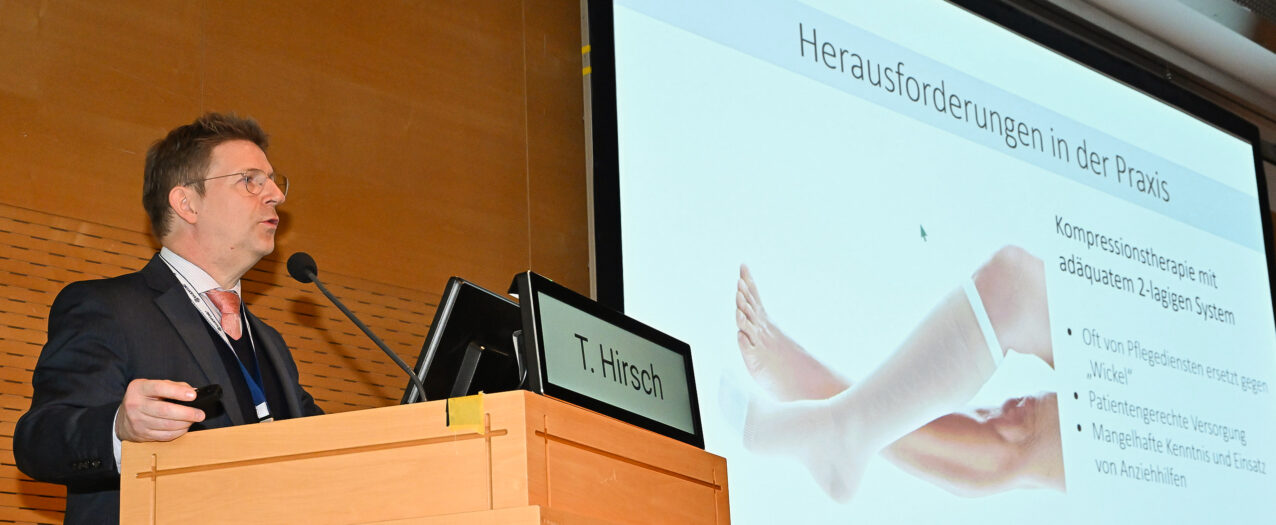
Venous leg ulcers are often hard to treat. The reason for that is usually a lack of knowledge when it comes to treating in accordance with the Guidelines. But when contemporary compression products, such as ulcer compression stockings or medical adaptive compression systems (MAC), are used based on the stage of the condition, compression therapy keeps its promise: improving patients’ quality of life.
One of the key factors when treating venous leg ulcers (VLU) is know-how. This is what the title of Bauerfeind’s company symposium at the Annual DGPL Conference referred to: “When expertise takes effect and compression products hold their position”. Since January 2024, the current S2k Guidelines for the Diagnosis and Treatment of Venous Leg Ulcers[1] have been available. These Guidelines are very clear: Compression therapy and the various compression products are part of guideline-compliant treatment and recurrence prevention of VLU. However, up to 70 percent of patients suffer from recurrence within a year[2], the treatment duration of up to 40 weeks is (too) long, improper use of materials drives up costs, and treatment compliance is often poor. Is expertise not effective after all?
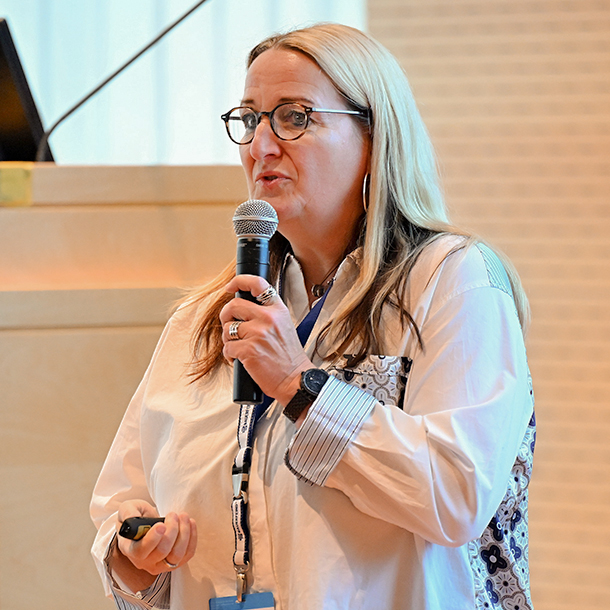
Care is the key intersection
Care, the crucial intersection between physician and patient, is extremely important. But especially in the care sector, knowledge relating to the proper treatment of VLU is often outdated or could do with expanding. The fact that this lack of know-how with all its consequences starts as early as training care staff was clearly substantiated by Kerstin Protz in a study supported by Bauerfeind with the title “Importance of proper and contemporary phlebological compression therapy during carer training”. Working at the Institute of Treatment Research in Dermatology and in the Care Profession, which is part of Hamburg-Eppendorf University Hospital, the Treatment Researcher and Expert for Wound Treatment examined content taught at German carer training facilities relating to phlebological compression therapy between December 2023 and May 2024 using questionnaires (n=204). Her results were sobering. In many carer training facilities (45.1 percent), merely one to three lessons were allocated for teaching this often exam-relevant topic. More than half (52.5 percent) of the training facilities do not teach compression therapy based on the stage of the condition, and as much as 82.4 percent do not convey the content related to this topic in accordance with the AWMF (Association of the Scientific Medical Societies in Germany) Guidelines. Among the eight text books mentioned during the study, none fulfilled all criteria relating to topicality and subject contents. The discrepancy between the scientifically founded knowledge and that taught during training and therefore used during the practical care work is thus significant. So significant in fact that consequences, such as a lack of treatment success, low compliance, inappropriately used finances, and frustration in those involved, can find their causes here. From another perspective, these results also showed that the role of a carer in compression therapy treating venous leg ulcers must not be underestimated – this is what its success hinges on.
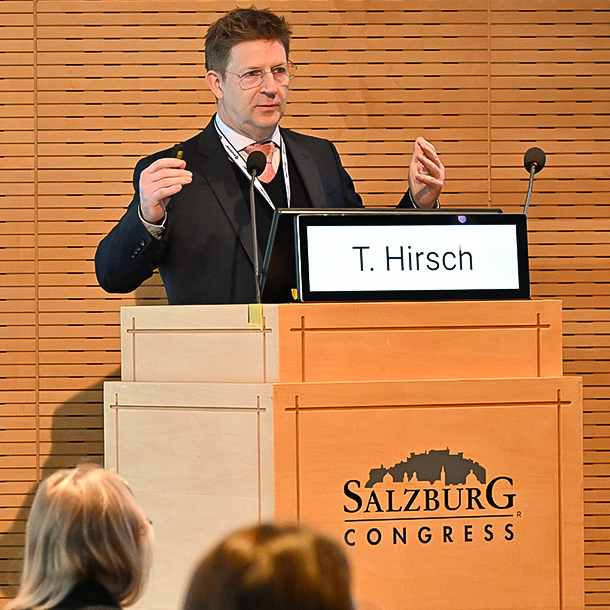
VLU treatment between preference and reality
Afterwards, Dr. Tobias Hirsch who works at the Vein Competence Center in Halle on Saale looked at some “Challenges during practical work” and therefore the immense gap between preference and reality. “In theory, treatment is easy,” the speaker highlighted but pointed out that it is much harder to act in the framework of funding organizations. In Germany, reflux elimination using stripping is a service that forms part of standard care. Even endovenous procedures are generally available. Sclerotherapy of the ulcer bed veins, however, is not performed routinely, even though it is advisable to treat the environment around the ulcer as well. Wound debridement is a service under statutory health insurance but only as part of standard care. In the Vein Competence Center, debridement is performed in the operating theater, which requires trained staff in addition to space and technology.
Phlebological compression bandages (PCB) as an art form
For subsequent wound care, there is a wide product range. However, these products are budget-relevant and expensive. Dr. Hirsch regards compression bandages often used in treatment with certain skepticism: “A properly applied bandage works brilliantly – but it takes time and is an art form!” By and large, treating VLU consistently using compression products is often difficult in an outpatient setting. Intermittent pneumatic compression (IPC) is available in specialist practices but prescribing this process is complicated and declined in many cases. Dr. Hirsch sees medical adaptive compression systems (MAC) as a “game changer”. They have been on the market for wound treatment for more than ten years – yet many family physicians know nothing about these systems. When it comes to compression therapy with stockings, specialist ulcer compression stockings used following edema reduction are the best method according to Dr. Hirsch. Despite the high-quality products, there are still shortcomings in treatment – the whole concept may fail, for example, if the patient does not receive a donning aid.
Inpatient care to set the course for treatment
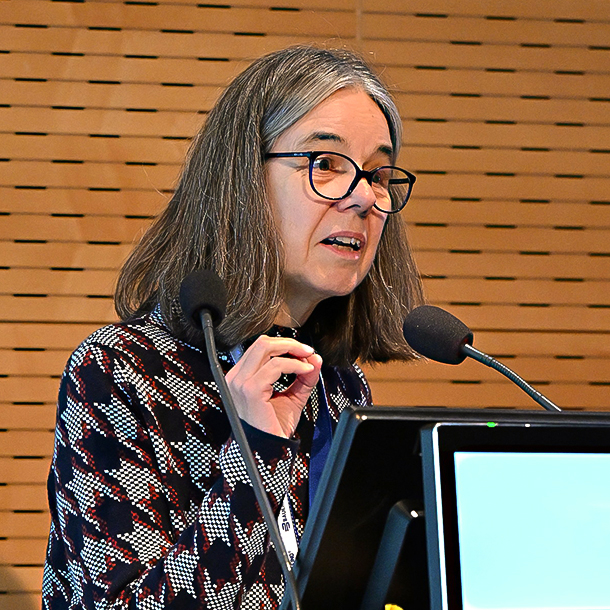
In which cases are ulcer patients treated in an inpatient setting? This is what Prof. Dr. Birgit Kahle, Senior Physician at the Department of Dermatology at Schleswig-Holstein University Hospital, spoke about. Patients are admitted to inpatient care if they have comorbidities, their condition is hard to treat, their ulcers have progressed or increased in number, they suffer from super infections, or following surgery. Using the example of a venous leg ulcer on the upper part of the calf above an intramuscular venous malformation which caused extreme external decongestion, Prof. Dr. Kahle demonstrated how quickly professional and consistently applied compression works. The patient received eccentric compression in this area with a compression stocking system on top. After five days, the pain and the inflammation had subsided. When treating capillaritis alba – very painful and inflammatory – a compression stocking system also proved itself highly effective. According to the vascular expert, there is also a large group of overwhelmed patients for whom inpatient care can stabilize treatment. Interaction with care staff is often difficult with this group of patients (“I won’t let them back in!”). In an inpatient setting, local treatment and compression therapy are intensified and the patient is educated about further measures. “Setting the course” is what the speaker called this aspect. It is about getting the derailed relationship between patient and carer back on track.

Compression products hold their position – and their promise
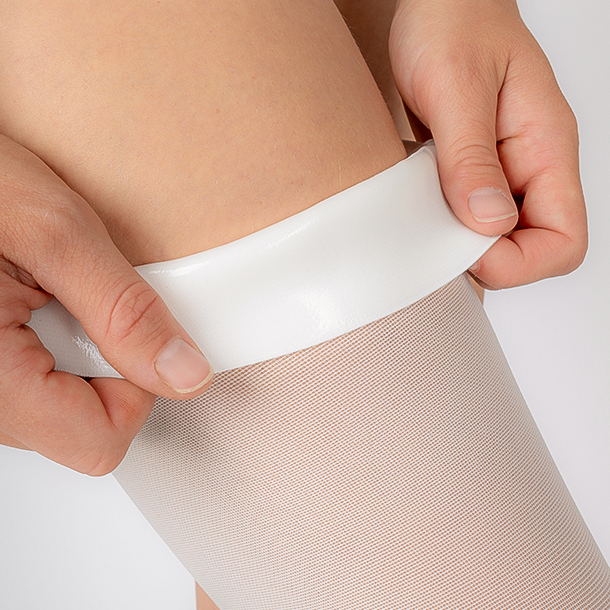
When talking to patients, misinformation can then also be corrected – for example “A wound mustn’t be covered with a stocking”. Unhappy and frustrated patients in particular are susceptible to this type of misinformation. Treatment in accordance with the Guidelines, however, can improve compliance. After decongestion, switching from phlebological compression bandages to a two-layer ulcer compression stocking system guarantees improvement in patient satisfaction and quality of life, in addition to safeguarding the treatment outcome. They can put their shoes on again and the annoying slipping of the bandage over the course of the day will no longer be an issue. This is where we come full circle with the motto of Bauerfeind’s company symposium: If the available know-how is applied and the correct compression product is used, this serious vein problem can be treated successfully.
Pictures: Andreas Wetzel, Bauerfeind AG
Related topics
Lymph and lipedema·Compression stockings·Venous disorders
Complex and complicated
Treating lymphedema and lipedema

Compression stockings·Venous disorders
“Circular knit is always worth a try”
Compression therapy with the perfect fit

Orthoses·Compression stockings·Knee pain
“Do I always need drainage?”
Orthopedics meets compression

Product-Finder App

This app greatly simplifies the selection of suitable medical aids for doctors and specialist dealers. With its intuitive usability, information on Bauerfeind products is available everywhere – quickly and easily
