In short During the hands-on workshop at the 2025 annual conference of the DGPL in Salzburg, the three speakers Dr. Denise Luchsinger (Senior Consultant in Angiology at the Cantonal Hospital of Winterthur, Switzerland), Prim. Dr. Christian Ure (Head of the Lymph Clinic Wolfsberg in Carinthia, Austria), and Dr. Julia Middelhoff (office-based specialist in visceral surgery from Hanau, Germany) discussed how lymphoedema and lipoedema can be successfully treated. Three speakers, two topics: case studies, guidelines, and definitions at a glance.
Lymph and lipedema·Compression stockings·Venous disorders
Complex and complicated
Treating lymphedema and lipedema
From Bauerfeind Life on 14.01.2026
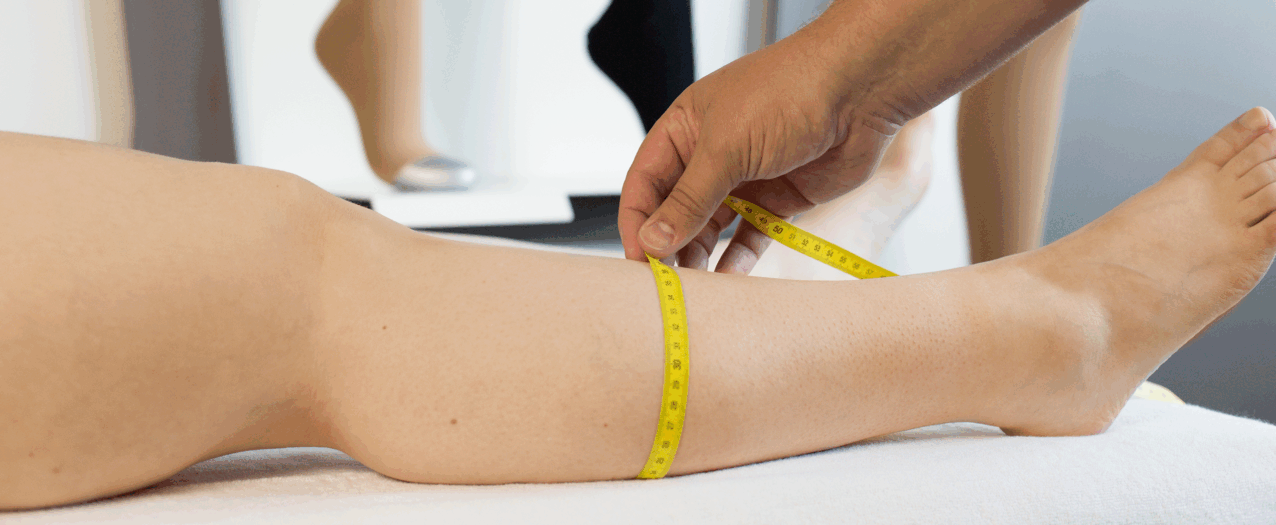
Treating lymphedema and lipedema is complex and requires all treatment approaches to work in sync. Self-management performed by those affected is key in contributing to alleviate symptoms. Compression is a major factor for both conditions.
“Your legs? Not my business.” The speakers involved in the Bauerfeind workshop at the annual DGPL Conference in September 2025 in Salzburg objected to this little provocation in the title. Legs – with lymphedema and lipedema problems – are absolutely their business. The two specialist presentations by Dr. Denise Luchsinger, Prim. Dr. Christian Ure, and Dr. Julia Middelhoff were specifically about examples from the speakers’ everyday work, but also about certain aspects of diagnosing and treating lymphedema and lipedema.
What patients have to (be able to) do
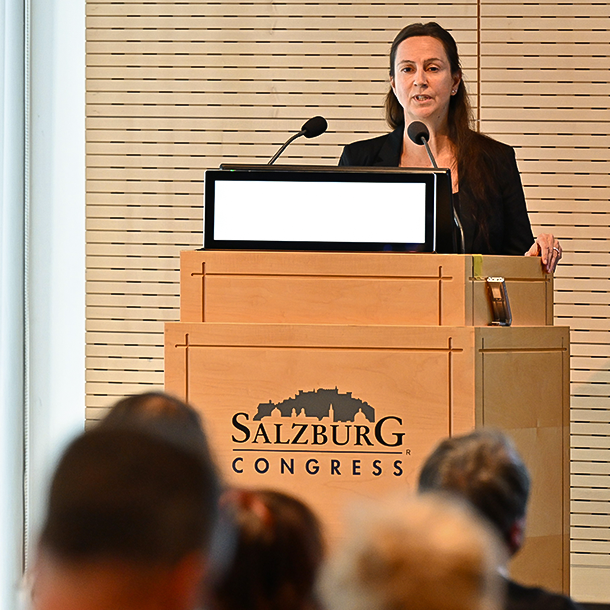
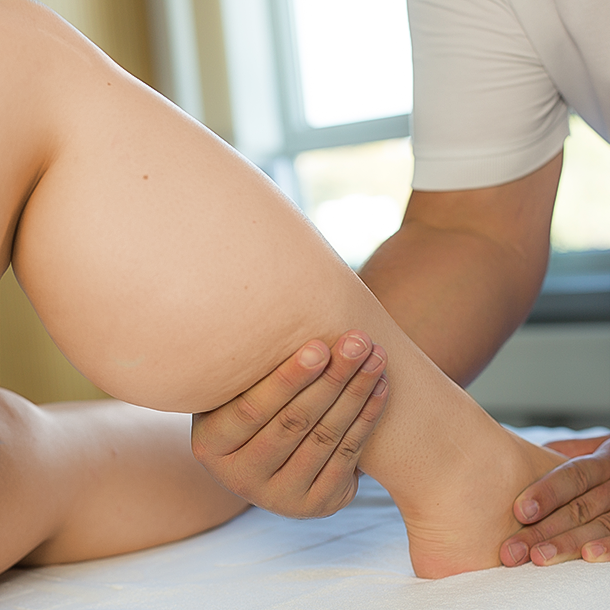
Dr. Denise Luchsinger, Senior Physician for Angiology at Winterthur Canton Hospital in Switzerland, initially drew up the basics. She focused on the five elements of conservatively treating lymphedema, first in the decongestion phase and then the maintenance phase: manual lymphatic drainage (MLD), compression, exercise and an active lifestyle, skin care, as well as the patients’ own self-management. None of these five measures by themselves will suffice to combat this chronic condition. MLD, for example, will be ineffective without subsequent compression. Treatment planning is therefore complex and requires active involvement both by therapists and patients. “You have to be your own case manager,” Dr. Luchsinger summarized. The physician is also responsible for working out what the individual patient can manage when it comes to treatment and therapeutic measures.
The complicated lymphedema
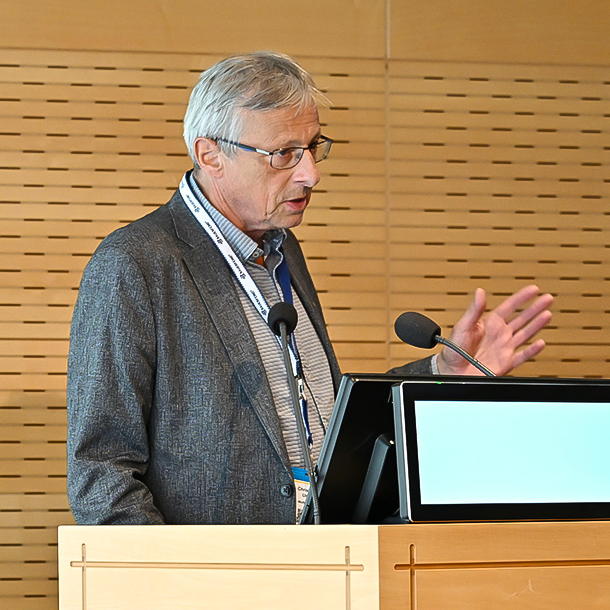
Prim. Dr. Christian Ure, Head of Wolfsberg Lymphology Hospital in Kärnten, Austria, dove deep into the subject of comorbidities. Using two case studies, he demonstrated how complicated lymphedema with pronounced comorbidities can be and how important a treatment approach with systemic focus is, in addition to local treatment: The first case involved a middle-aged man whose medical history, besides chronic secondary leg lymphedema, included bullous, necrotizing erysipelas, polyneuropathy, and impaired glucose tolerance. The other case involved an elderly man who was suffering from chronic Stage III leg lymphedema. His conditions included atrial fibrillation, renal insufficiency, thrombocytopenia, prostate surgery, and papillomatosis cutis lymphostatica. In such complicated cases, a mere local approach (wound treatment) is just as inadequate as simply treating with a systemic focus, for example taking antibiotics. The combination of both, however, is also an effective regime for lymphedema patients with comorbidities.
Lymphedema treated in outpatient care
From the perspective of a physician with her own practice, Dr. Julia Middelhoff from Hanau in Germany presented the case of a patient in her early 30s who had a leg circumference difference even as a child, which her pediatrician noticed. At the age of 12, she was asked about it on a class trip. She had been undergoing medical treatment for many years but only ever been receiving Compression Class II circular knit knee-high stockings. Even the increase in symptoms following cruciate ligament reconstruction in her knee did not result in a change in treatment. When she visited Dr. Middelhoff, she had (hereditary) Stage II lymphedema on the right and Stage I on the left as well as prominent varicose veins in the right thigh. Following extensive medical consultation and a visit to a specialized medical supply retailer, the patient received Class 2 flat knit compression garments for both legs but, as opposed to previous years, these now consisted of several made-to-measure parts including leggings with separate foot sections featuring different compression classes on the right and left. Owing to her extreme work load and therefore an inability to take up appointments for regular lymphatic drainage, the patient was prescribed IPC in addition to MLD, which she now uses consistently. Thanks to good skin care, walking, and check-up appointments, the patient is now coping well during everyday life. Concerning the prominent varicose veins, the patient was recommended to undergo extensive diagnostics so venous-lymphatic low-flow malformation could be excluded.
From lipedema to lipedema syndrome?
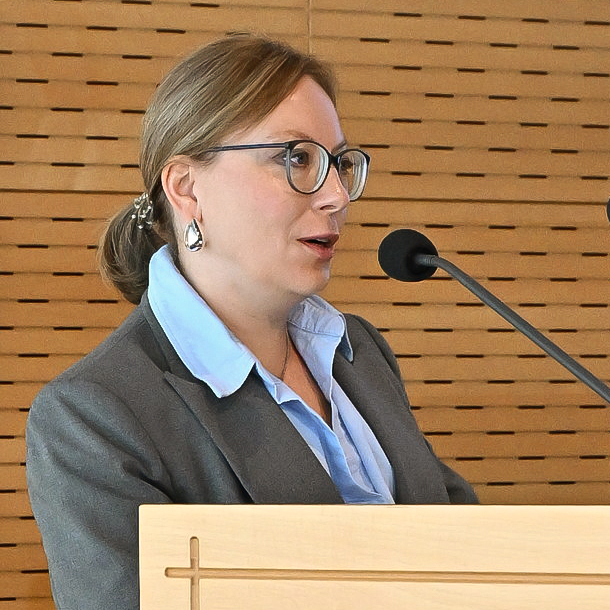
Dr. Denise Luchsinger focused her second presentation on the paradigm shift on the subject of lipedema. The publication of the new S2k Lipedema Guidelines in January 2024 made it official that (what was previously labelled) “lipedema” is neither an edema condition nor does it include lymph vessel pathologies. The designation “lipedema syndrome” does the complex condition better justice, according to some experts. For lipedema, Dr. Luchsinger highlighted the main symptom of permanent pain. Using this criterion, lipedema can easily be distinguished from lipohypertrophy. The traditional categorization of stages is now also obsolete in the new Guidelines. Lipedema affects women almost exclusively. It is always a disproportional, symmetric fat distribution disorder in the extremities. According to a hypothesis, inflammatory mediators can develop in the fatty tissue, which explains the chronic pain, or hypoxia. Others postulate a connection with nerve fibers which may explain the pain. Lipedema is not a consequence of obesity but can be associated with it. Symptoms often start or get worse as a result of weight gain, which frequently happens during hormonal changes. A survey carried out at Földiklinik Hospital found that around 80 percent of patients suffered chronic-psychological strain before the condition developed. This interaction of the physical and mental level would also be an argument for seeing the condition as a “syndrome”.
Compression products must be made-to-measure
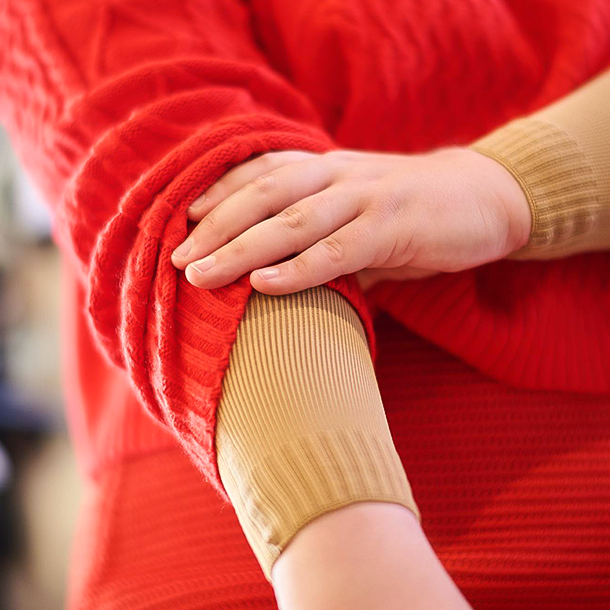
Dr. Julia Middelhoff presented a case from her practice where compliance improvement, thanks to suitable products, resulted in an alleviation of the symptoms and, primarily, a reduction in pain level. Following bariatric surgery, a patient had lost 55 kg, though without a significant change in upper arm or leg circumference. Lipedema (Stage III) had already been diagnosed. The patient had previously received flat knit compression products but she was not able to use them effectively. She also suffered from a series of comorbidities, including unilateral necrosis of the femoral head following high-dose cortisone treatment, chronic depression, and chronic pain syndrome. The patient rated her pain level in the upper arms at 10 out of 10 but since she also suffered from chronic pain syndrome and took medication for it, the pain could not be clearly distinguished. When asked about her personal wishes, the patient mentioned more education and guidance along the treatment journey. For example, she felt that her physician prescribing MLD irregularly was inadequate. The patient complied very well with her treatment. The fact that she did not wear the compression product prescribed to her was down to her inability to don the single-part flat knit garment. After discussing this with the medical supply retailer, she received a product consisting of several parts which was much easier to don. She reported that this compression reduced her pain from 10 to 8.
What lipedema is not
Dr. Christian Ure warned not to judge the appearance of a patient prematurely. Using an example, he demonstrated how misleading the application of different index values can be: height 173 cm, weight 120 kg, waist circumference 78 cm, hip circumference 118 cm. Her BMI of 40 indicated pathological obesity. An online calculator of the waist-hip ratio sees this differently. It results in a value of 0.66 – normal weight. Different again is the result of the WhtR value calculation (waist-to-height ratio): 0.45, with the online tool commenting: “Great! Your weight is in the normal range!” When it comes to lipedema patients, we must therefore take into account that the BMI alone is not significant. There are two objectives for treatment according to Dr. Ure: alleviation of symptoms, i.e. pain as well as disproportionality, and controlling dermatological, lymphological, as well as orthopedic complications. Compression plays a key role for pain reduction. Whether compression is implemented using circular knit or flat knit stockings will depend on the patient’s anatomy. Medical adaptive compression systems (MAC) can also be used. Patients’ enormous psychological strain must also be borne in mind, not least amidst common yet unrealistic ideals of beauty and body images. Comparing images of Venus of Willendorf and Barbie (now modified) does show, however, how ideals of beauty depend on the era.
Related topics
Compression stockings·Venous disorders
“Circular knit is always worth a try”
Compression therapy with the perfect fit

Orthoses·Compression stockings·Knee pain
“Do I always need drainage?”
Orthopedics meets compression

Ulcus Cruris Venosum·Compression stockings·Venous disorders
If in doubt, use compression
Vein problems

Product-Finder App

This app greatly simplifies the selection of suitable medical aids for doctors and specialist dealers. With its intuitive usability, information on Bauerfeind products is available everywhere – quickly and easily
